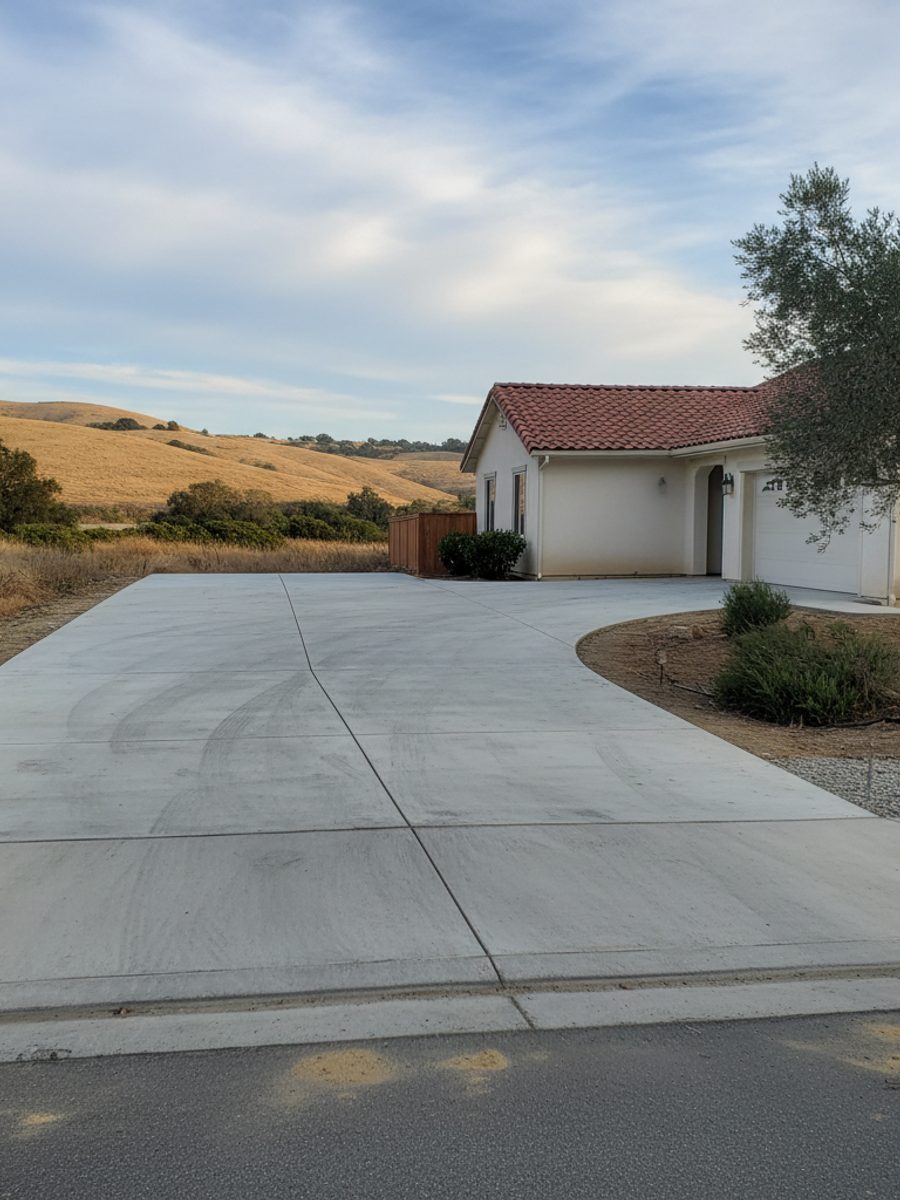
Concrete doesn't care what the calendar says. It cares about temperature, moisture, and how fast water leaves the mix once it hits the ground. In San Jose we get a wide window where conditions are workable, wider than most of the country, but that doesn't mean every month is the same. Late June through early October gives you the most predictable pours. November through March brings rain that can shut a job down for days at a time. The months in between are where the real judgment calls happen.
The dry season is long here, and that's the advantage
San Jose gets a Mediterranean climate, which means we're not fighting humidity the way a contractor in Houston is, and we're not fighting hard freezes the way someone in Denver is. Most years the rain stops by late April and doesn't really start again until November. That gives us close to six months where you can schedule a pour and reasonably expect clear skies for the 24 to 48 hours that matter most, which is the window right after the concrete comes out of the truck.
That stretch of dry weather is why most driveways, patios, and slabs in this area get poured between May and October. It's not a rule, it's just where the odds are best.
What summer heat actually does to the mix
Here's the part people don't expect. Hot weather isn't automatically good for concrete, even in a dry climate like ours. Once surface temperatures climb into the high 80s and 90s, which happens regularly here in July and August, water evaporates out of the top of the slab faster than the concrete below is setting up. That's called plastic shrinkage cracking, and it shows up as a web of thin cracks in the first few hours, sometimes before the crew has even left the site.
The fix isn't complicated, it's just discipline. We pour early in the morning before the afternoon heat sets in, we get curing compound on the surface the same day instead of waiting, and on the hottest afternoons we'll fog the surface with water to keep it from flashing off too fast. A slab poured at 7 a.m. in August behaves completely differently than the same mix poured at 1 p.m.
What the rainy season actually costs you
San Jose's rain is concentrated, mostly December through February, with the wettest stretch usually falling in January. A pour needs the surface protected from rain for at least the first 24 hours, ideally longer, because rainfall on fresh concrete dilutes the cement paste right at the surface and leaves it weak and dusty, sometimes permanently. If rain hits a slab that's only a few hours old, you can end up with a surface that spalls or flakes within a year or two.
Winter work is still doable. Temperatures here rarely drop below the mid-40s, and concrete cures fine anywhere above 50 degrees, which covers most San Jose winter days even if the nights get cold. The real issue is scheduling around storms, not the cold itself. A contractor who's paying attention will watch the ten-day forecast and move a pour date rather than gamble on a system that's supposed to clear out by noon.
What the ground is doing underneath all of this
Soil matters as much as weather, maybe more. A lot of the Santa Clara Valley sits on clay, and clay soil swells when it's wet and shrinks when it dries out. That movement is what causes slabs to crack or heave over the years, especially in neighborhoods like parts of Evergreen and Almaden Valley where the clay content runs higher. A slab poured on bone-dry clay in September sits on ground that's going to expand again once the winter rains soak in, so the base prep, compaction, and any base rock underneath need to account for that movement before the concrete ever goes down, not after.
This is also why older streets behave differently than new subdivisions. Neighborhoods built in the 1940s and 50s, areas like Willow Glen or Naglee Park, often have original slabs poured with less rebar than we'd use today, sometimes just wire mesh, and decades of soil movement have had time to work on them. Newer subdivisions in South San Jose or Coyote Valley usually have more engineered fill under the slabs and more consistent grading, which means fewer surprises when we cut into the ground.
Permits and timing go together
Most flatwork in San Jose goes through the city's building division, and anything touching the sidewalk, curb, or driveway apron in the public right-of-way needs an encroachment permit through Public Works, separate from the building permit. For a new foundation, a retaining wall over about 4 feet, or any structural slab, expect an inspection of the forms and rebar before the pour gets approved, and sometimes a second inspection after. If your property's in unincorporated county land rather than city limits, that process runs through Santa Clara County instead.
None of that changes with the seasons, but the timeline does. Permit review doesn't move faster in summer, so if you're aiming for a July pour, it pays to start the paperwork in spring. HOAs are common in a lot of the newer developments too, and they'll usually want to approve exterior work like a patio or stamped driveway before the city does, which adds another few weeks if you haven't started early.
So what's the actual answer
Late spring through early fall gives the most forgiving conditions overall, with morning pours in the hottest stretch of summer to keep the mix from drying too fast. Winter work isn't off the table, it just needs tighter weather tracking and more patience around rain delays. What matters most isn't picking the perfect month, it's having a crew that adjusts the pour time, the curing method, and the base prep to whatever the ground and the sky are actually doing that week. That's the part that decides whether a slab is still flat and crack-free in fifteen years or starting to show problems in three. If you're planning a project and want to talk through timing for your specific site, that's the kind of thing we walk through with every homeowner at Omega Concrete.